
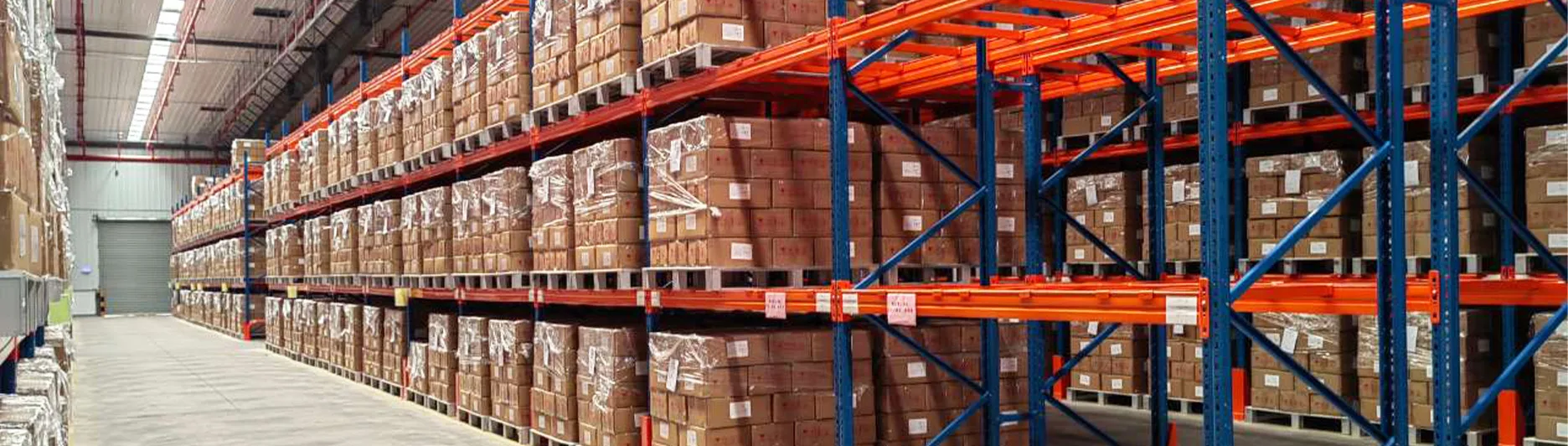
Introduction to the structural specifications of Double-Deep Racking
Double-deep racking is a common type of warehouse shelving designed for businesses that need to store large quantities of homogeneous goods. Its structural specifications include:
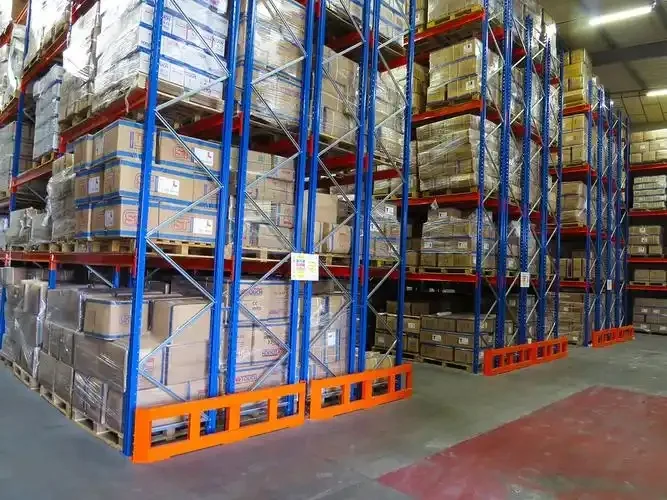
1. Overall Structure: Composed of upright columns, horizontal beams, cross braces, diagonal braces, and horizontal tie rods.
2. Material: Primarily made of cold-rolled steel plates, offering high load-bearing capacity and stability.
3. Column Height: Adjustable between 2–12 meters to meet specific requirements.
4. Load Capacity: Typically 500–2,000 kg, customizable based on stored items and needs.
5. Pallet Size: Standard pallet dimensions are 1,200×1,000 mm or 1,200×800 mm.
6. Layout: Each row consists of two sets of racks.
7. Shelf Height: Adjustable between 2–3 meters per layer.
8. Number of Layers: Typically 2–6 layers, customizable as needed.
9. Base Height: Adjustable between 300–500 mm for the bottom layer.
10. Installation: Secured with expansion bolts or nuts, requiring precise leveling during setup.
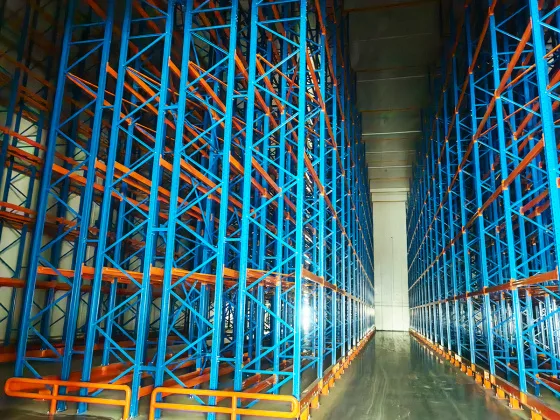
Double-deep racking effectively addresses the limited storage capacity of traditional beam racking by doubling storage space. Variations in structural specifications directly impact load-bearing capacity and stability, making proper selection critical for safety and warehouse efficiency.