Push-Back Pallet Racking
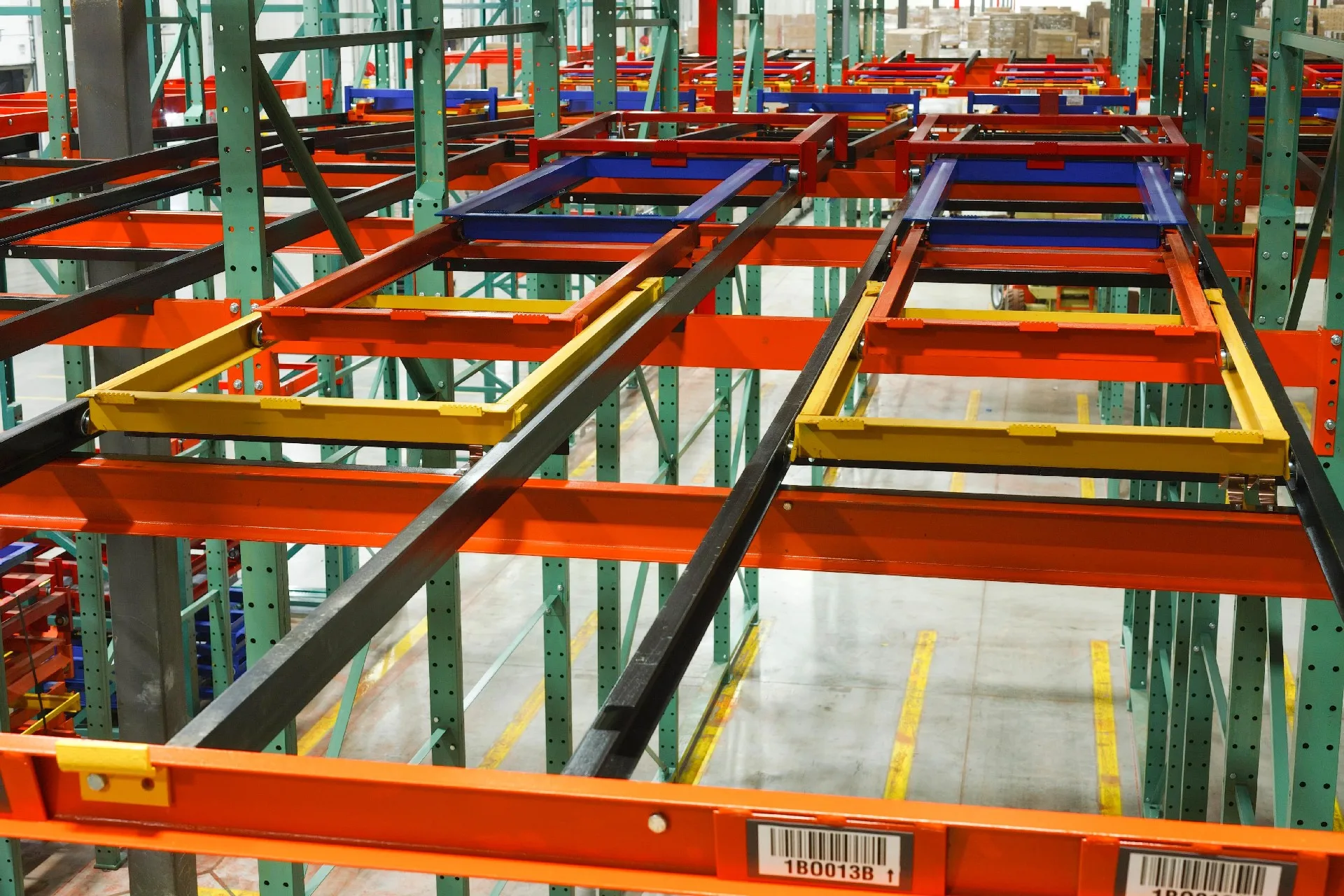
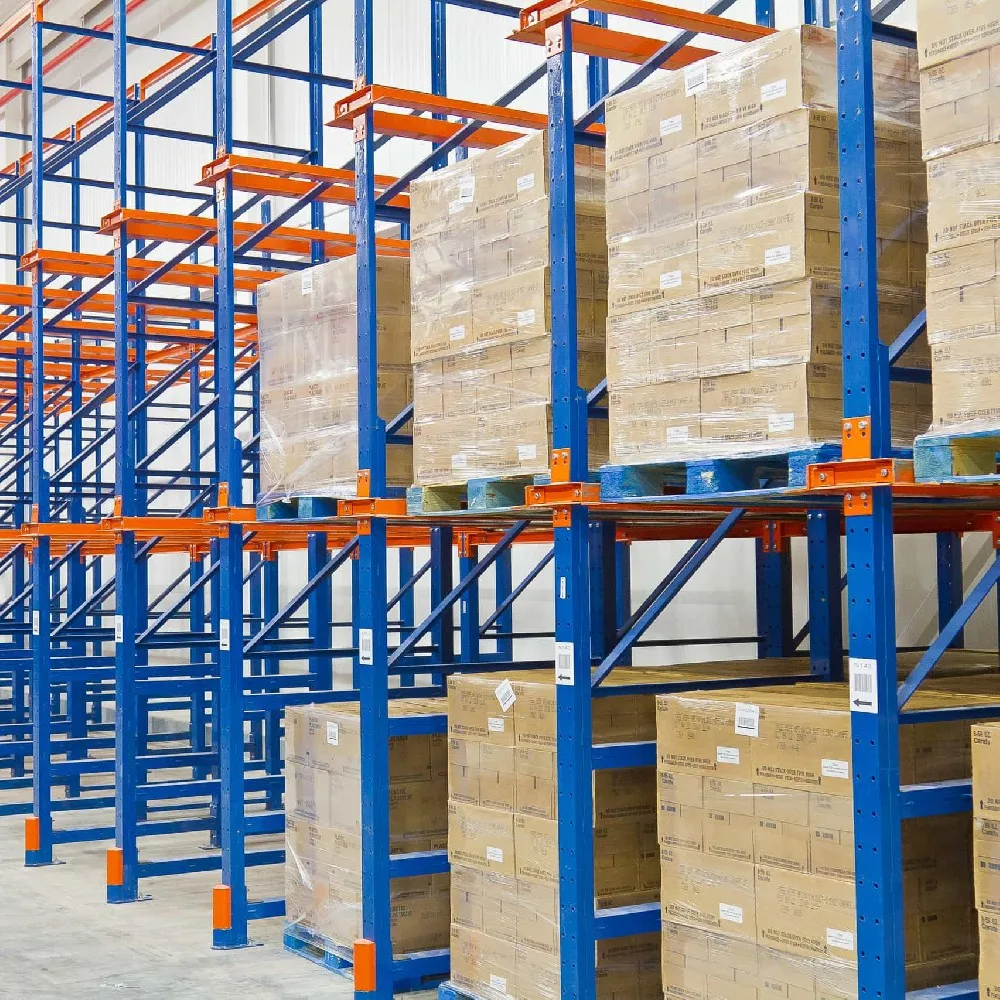
Push Back Racking is a high-density storage system designed to optimize warehouse space by allowing pallets to be stored up to six deep within a single lane. This system is ideal for businesses seeking to maximize storage capacity while maintaining efficient inventory management and easy access to goods.
Specifications
Figures below are the standard range for this system. Final values are confirmed per project after pallet sizes, load per pallet and clear height are reviewed.
| Design basis | EN 15512 structural principles, FEM 10.2.02; load capacity verified per project |
|---|
Products Description
Push-Back Racking is a high-density storage system designed to optimize warehouse space by allowing pallets to be stored up to six deep within a single lane. This system is ideal for businesses seeking to maximize storage capacity while maintaining efficient inventory management and easy access to goods.
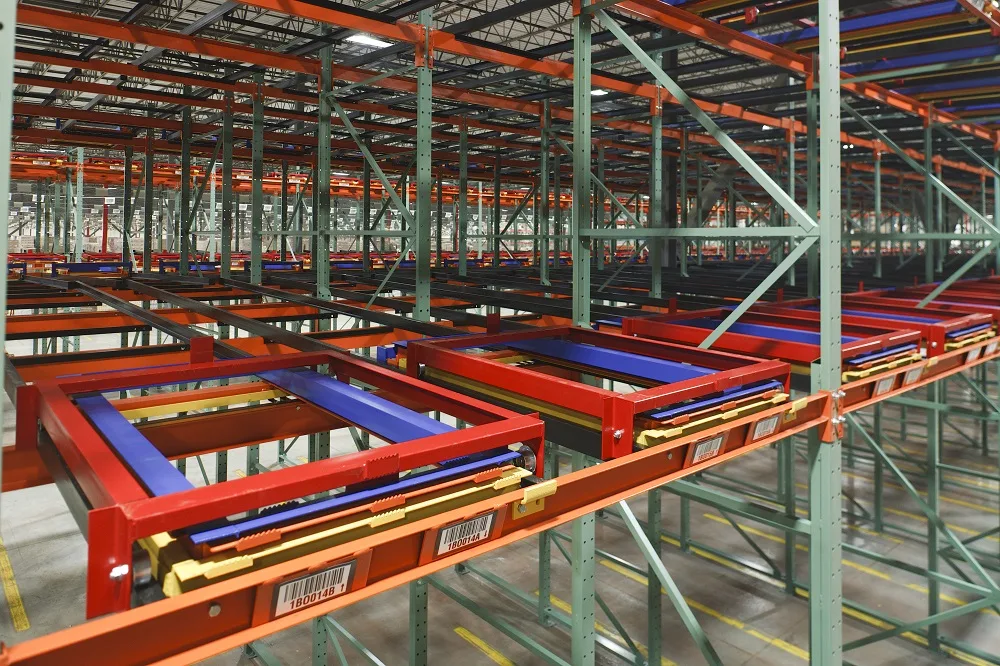
Applications:
Warehouses: Ideal for facilities with limited space that want to maximize storage capacity.
Distribution Centers: Improves inventory management by providing quick access to stored products.
Cold Storage: Suitable for perishable goods requiring efficient storage and retrieval.
Manufacturing Facilities: Facilitates organized storage of raw materials and finished products.
Advantages:
Space Maximization: Push-back racking helps to maximize vertical space and storage density in the warehouse.
Operational Efficiency: Streamlines loading and unloading processes, reducing handling times.
Cost-Effective: Compared to other high-density storage systems, push-back racking provides a cost-effective solution while ensuring easy access to stored goods.
Flexibility: Accommodates a variety of pallet sizes and weights, making it adaptable to various storage needs.
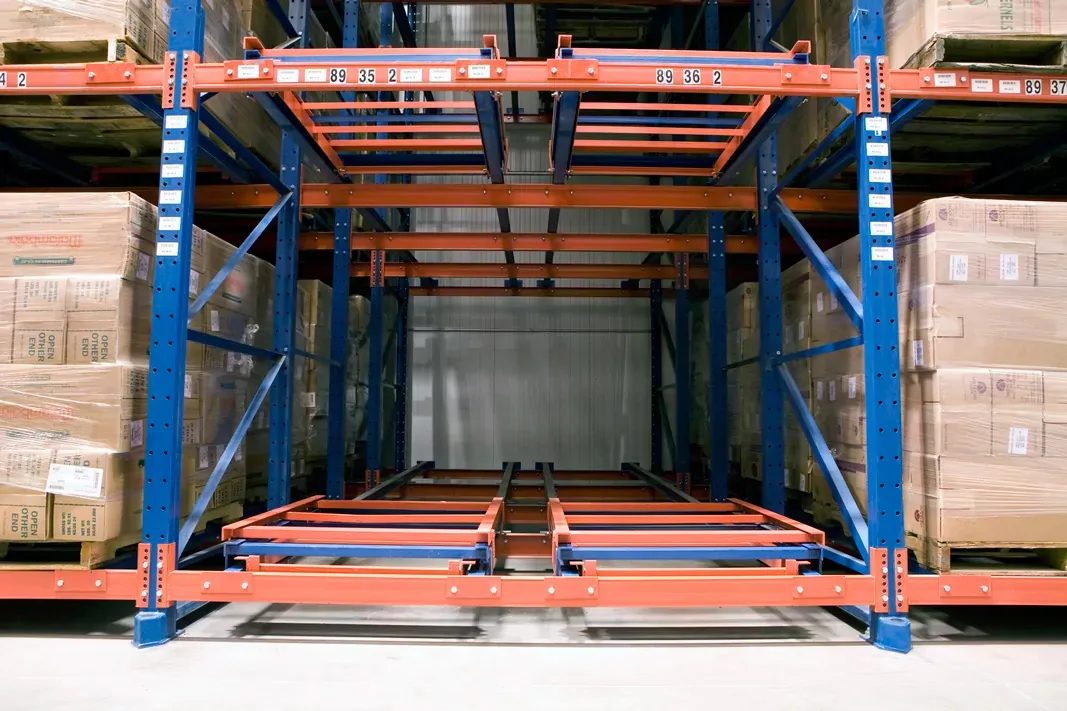
Considerations:
Inventory Turnover: Best suited for products with similar turnover rates due to the LIFO storage method.
Forklift Requirements: Requires forklifts capable of handling deep storage and pallet shifting.
Initial Investment: While offering long-term benefits, the initial setup cost may be higher compared to traditional racking systems.
Push-Back Rack Specifications:
| Max Pallet Depth | Up to 6 pallets deep, customizable based on needs |
| Pallet Load Capacity | Typically 500-1000 kg per pallet (depending on design and application) |
| Pallet Dimensions | Suitable for standard pallets, supports various sizes of goods |
| Rack Material | High-strength steel, rust-resistant coating (galvanized or powder-coated) |
| Rack Height | Customizable, typically between 2m to 8m |
| Aisle Width | Varies with pallet size, usually between 2.5m and 3m |
| Safety Features | Anti-tilt devices, safety locks for secure operation |
| Installation | Modular design for easy assembly and disassembly |
Push-Back Racking provides a highly efficient, space-saving storage solution ideal for businesses looking to increase storage density without sacrificing access to inventory. Its design maximizes vertical space while improving operational efficiency and reducing costs. The system is suitable for a wide range of applications, including warehouses, distribution centers, cold storage, and manufacturing environments.
Frequently asked questions
What load can each level carry?
Capacity is engineered per project, because it depends on the beam span, the upright section and how the pallet sits on the beams. For this product range the standard figure is 500–4,000 kg per level; anything outside that range is calculated case by case. Send us the pallet size and load per pallet and we will confirm the figure for your bay.
Can beam levels be adjusted after installation?
Yes. Beams sit in punched slots along the upright, normally on a 50 mm pitch, so a level can be moved without replacing the frame. The load rating has to be re-checked against the new span before the level is reloaded — never change a beam position without confirming the capacity for that configuration.
Which standards is the system designed to?
Design follows the principles of EN 15512 (steel static design) and FEM 10.2.02, with tolerances and clearances taken from EN 15620 and inspection/maintenance guidance from EN 15635. For North American projects we work to RMI/ANSI MH16.1. Load capacities are verified for each project rather than published as a single blanket rating.
Do you provide layout drawings and load calculations?
Yes. Send the floor plan (or just overall dimensions), pallet size, load per pallet, required number of positions and available clear height. We return a 2D layout, a 3D view and a beam load table with the quotation, so you can check the design before ordering.
What is the lead time and how is it shipped?
Standard bays are produced in about 15–25 days after drawing approval; large multi-phase projects are scheduled by delivery phase. Racking ships knock-down in containers, FOB or CIF, with marked bundles, installation drawings and an anchor bolt plan included.
Can the racking be extended later?
Yes. It is a bolted modular system: new bays can be added at either end of a row, and existing uprights accept additional beam levels. Expansion keeps the same upright and beam sections, so the added structure matches the original installation.
Designed & manufactured to
- EN 15512
- FEM 10.2.02
- RMI / ANSI MH16.1
- EN 15635 inspection
- ISO 9001:2015
Need this system sized for your warehouse?
Send pallet size, load per pallet and clear height — we reply with a layout, a load table and a price.